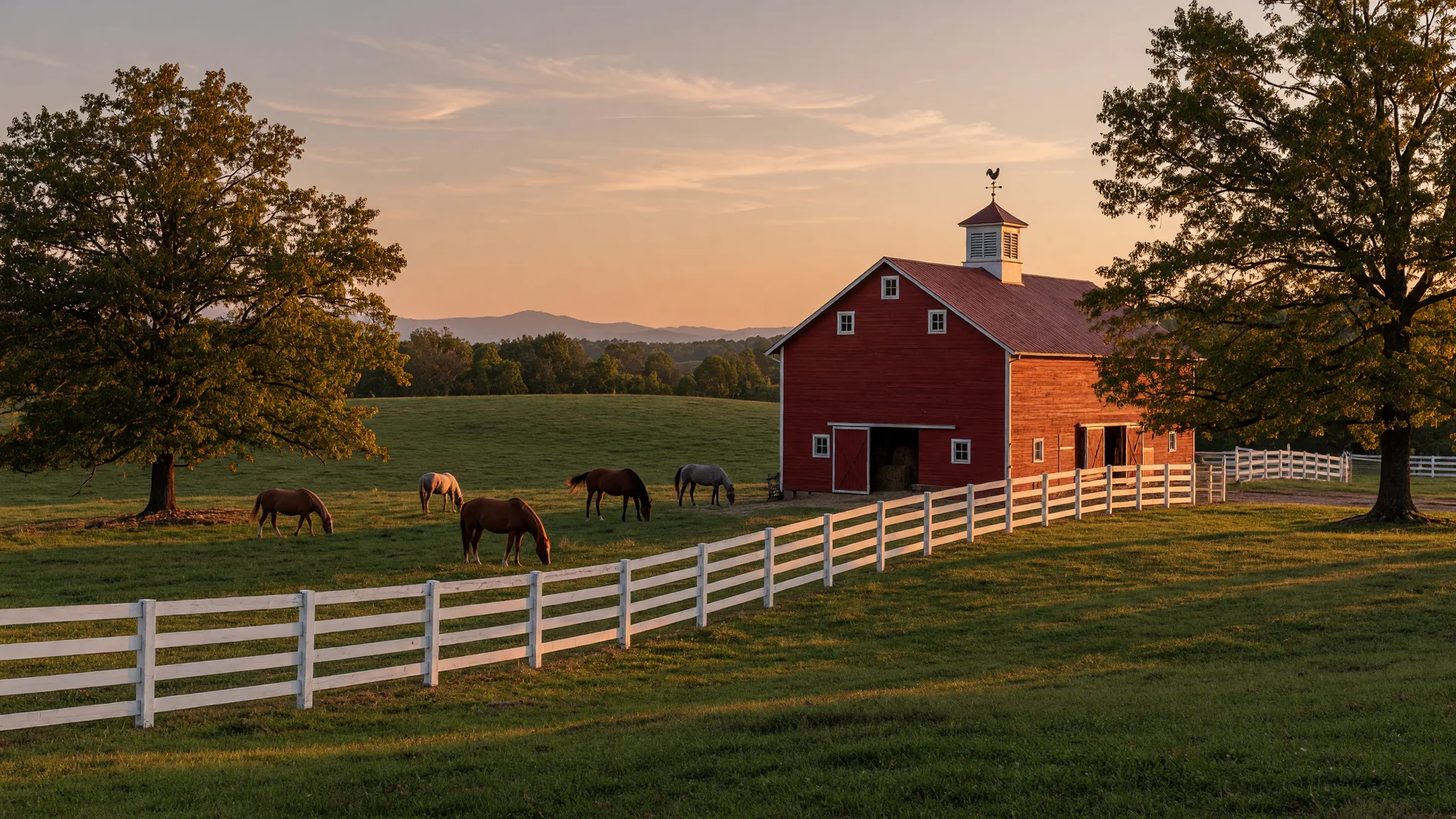
Specialty · Equestrian Properties
For people who love horses, the right property is not a house with a barn attached, it is a complete system: pastures, fencing, water, room to ride, and the zoning that makes it legal to keep your herd at home. North Georgia is one of the best horse countries in the Southeast, with Milton's equestrian estates, Forsyth County farms, and rolling land north toward the Blue Ridge, all within commuting distance of Atlanta. I have spent years matching riders, breeders, and farm families with properties where the horses come first and the commute still works.
Zoning & Land Use
Beautiful acreage can still be the wrong property if the zoning does not allow horses, barns, or riding arenas. That is why every equestrian search I run begins with the parcel's zoning and land-use designation, not the curb appeal.
Agricultural zoning is the key. In Milton, the AG-1 district exists specifically to enable equestrian use, and roughly 85% of the city is zoned agriculturally. Other North Georgia counties have their own agricultural districts and regulations, and requirements for barn setbacks, well and septic distances, and building permits vary from one jurisdiction to the next.
Before we ever write an offer, I verify what the property allows: horses kept on the premises, barn construction and placement, covered arenas, and whether boarding is a permitted use. You should never find out after closing that your dream barn violates county code.
What the Horses Need
Plan on 2 to 3 acres per horse with a barn, more if you want grazing and room to ride. We match your herd size to the property's usable land, not just the total acreage number.
Four-board wood plank fencing is the standard for safe horse turnout. New fencing is one of the largest line items in any farm purchase, so we count it into the real cost of the property.
Automatic waterers, reliable wells on the right permits, and access in every pasture. Water infrastructure is easy to overlook and expensive to install later.
Riding rings, covered arenas, stall count, and tack space for your discipline, from dressage to jumping. Milton allows covered arenas on 10+ acre properties through its Large Lot Incentives program.
The Barn
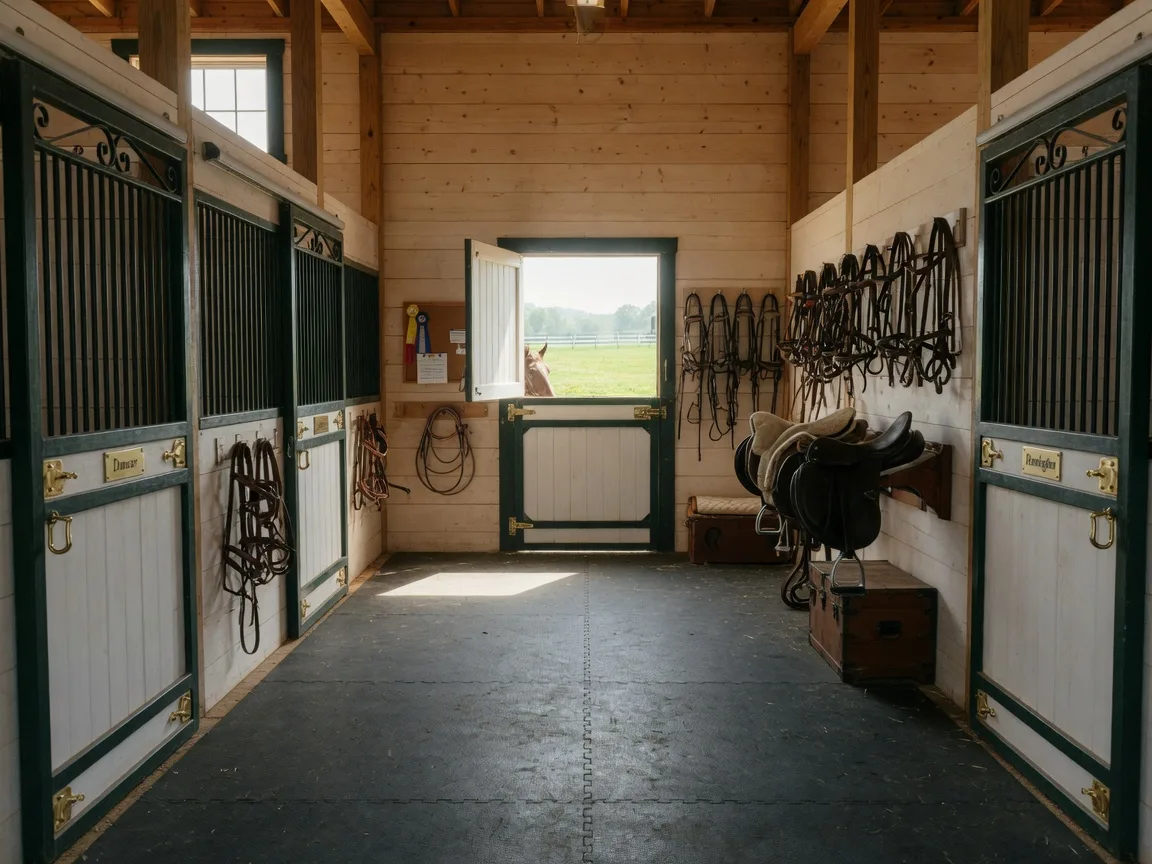
The barn is the heart of a horse property, and its condition sets the budget for years to come. I help buyers read a barn the way I read a house: foundation and drainage, stall construction, aisle width, electrical, water, and what it would take to bring an older barn up to modern standards.
New barns bring their own questions: can a replacement barn go in the same footprint, what setbacks apply, what permits does the county require, and what does the well and septic need to support the barn's water demand. These are exactly the details where an advisor who has done farm transactions helps you avoid surprises.
Horse Country
The heart of North Fulton horse country: agricultural zoning, estate lots, riding trails, and the communities of Birmingham Crossroads and Freemanville.
The Crabapple corridor blends equestrian estates along quiet country lanes with easy access to top schools and all of Alpharetta's amenities.
Forsyth County offers larger tracts, newer farm construction, and a shorter drive north, with horse-friendly pockets and lake views.
Cherokee County rural roads and rolling terrain give buyers more acreage per dollar just off the 575 corridor.
Farther north toward the Blue Ridge, land gets bigger, prices get more accessible, and the horse country gets more remote.
Milton, Alpharetta, and Cumming put you on GA-400 or GA-9 into the city when you need them, and rural Cherokee County rides the 575 corridor. Horse country does not have to mean remote.
Equestrian searches need a checklist most listing searches skip: zoning, usable acreage, water access, fencing condition, barn age, and county paperwork. I bring the checklist to every property we tour.
FAQ
As a practical rule of thumb, plan on at least 2 to 3 acres for a horse plus a barn, and ideally 3 to 5 acres per horse for grazing and turnout. That is the working formula many equestrian buyers use, but the real answer depends on your horse-keeping plan: full pasture board needs more acreage, a dry-lot management style needs less, and rotating paddocks keeps pasture healthy longer. We will talk through how many horses, how you plan to keep them, and what the property can support before you fall in love with a barn that is too small for the herd.
Milton is one of the most horse-friendly cities in Georgia: roughly 85% of the city is zoned agriculturally, and the AG-1 agricultural district is the primary zoning that enables equestrian uses on larger lots. Agricultural lots generally require at least 1 acre, and the city has increased minimum lot width at the building line for new AG-1 lots. Outside agricultural zones, Milton limits the number of domestic animals and livestock on a property. Zoning rules differ from county to county in Georgia, so the address, not the city name, decides what is allowed. I verify each property's zoning before we ever write an offer.
Requirements vary by jurisdiction, but common Georgia standards include setback distances from property lines, wells, and septic systems, permitted building sizes and heights, and sometimes special permits for covered riding arenas. Milton, for example, allows covered riding arenas on properties of 10 acres or more through its Large Lot Incentives program. A good rule: never assume a barn can go anywhere on the lot. We check the setbacks, the floodplain, and the county's specific standards before you commit to a property for its barn potential.
Maybe, and the answer is entirely zoning-dependent. Milton permits commercial boarding in specific settings, and other counties have their own rules about commercial equine operations, sometimes treated as a business use that needs a license or special approval. If you plan to board other people's horses, we flag that goal early and confirm the property actually allows it before you buy. For personal horses kept for your own use, the rules are usually simpler and tied to lot size and the agricultural zoning on the parcel.
Read the Milton community guide for more on horse country, or ask Julia directly about a specific property.
Next Step
Tell me how many horses you keep, what disciplines you ride, and where you need to be for work or family. I will bring back properties with the zoning, acreage, and barn that actually fit, and I will be honest about what each one will take to make horse-ready.
Julia De Sosa-Rocha is an Associate Broker licensed in Georgia (License #298322) with eXp Realty, serving equestrian buyers across Milton, Alpharetta, Cumming, Woodstock, and North Georgia. Zoning and land-use regulations are subject to change; always confirm current rules with the local jurisdiction.
Share your herd, your wish list, and your target areas, and I will do the rest.
Keep Reading
Julia
Metro Atlanta Real Estate
Where should I follow up?
Thank you!
I have your details and will follow up soon, usually within one business day.
Prefer to talk?
(404) 886-0566