Relocating to Alpharetta, GA: The Complete 2026 Guide to Moving to Alpharetta & North Fulton
Alpharetta is one of America's most in-demand suburbs. Here is what to know before you move: neighborhoods, schools, cost of living, commutes, and a practical 30-day plan, written by a local agent who has helped families relocate to North Fulton for 23 years.
Send a message and I will get back to you, usually within one business day.
By submitting, I agree to be contacted by Julia De Sosa-Rocha via phone, text, or email about real estate in Metro Atlanta. Reply ‘stop’ to opt out at any time.
The Short Version
What You Need to Know About Alpharetta in 2026
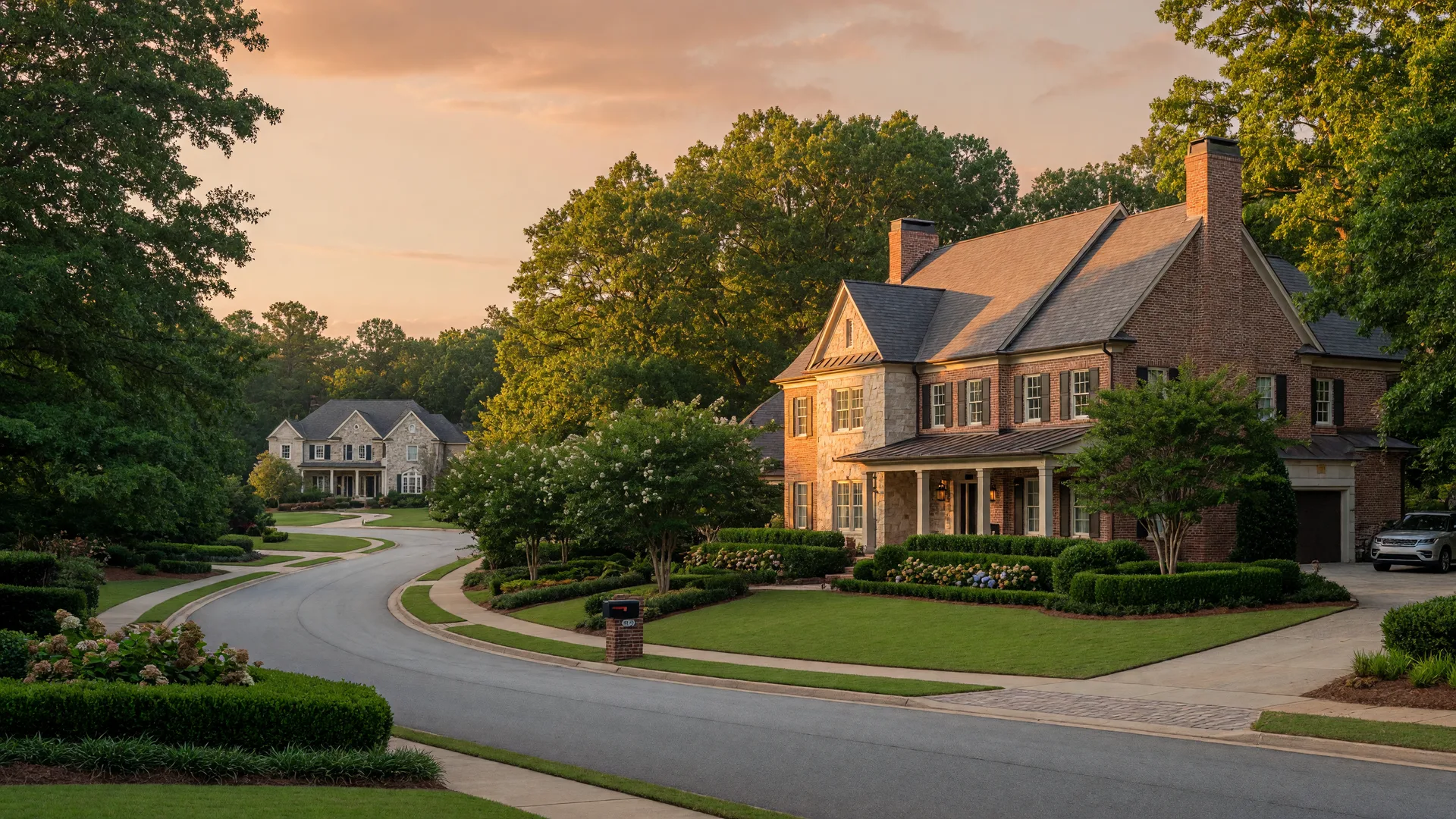
Alpharetta is a safe, affluent, family-focused city about 25 miles north of downtown Atlanta, anchored by the GA-400 technology corridor and the Avalon mixed-use district. Recent data puts the city at roughly 67,000 residents with steady annual growth, a median household income over $123,000, and top-tier Fulton County schools that draw relocating families from New Jersey, New York, and California in particular. Typical home prices run from roughly $450,000 into the six hundreds of thousands and beyond, with luxury neighborhoods far higher. If you are weighing a move to North Fulton, start here, then compare communities with me one on one.
~67kResidents, growing
$123k+Median income
25 miTo Atlanta via 400
700+Tech companies
A+Milton HS rating
Why Move Here
Why People Are Moving to Alpharetta
Alpharetta did not become one of America's most in-demand suburbs by accident. It stacked the four things relocators care about most: schools among the best in Georgia, safe, family-friendly neighborhoods with low crime, a deep job market along the GA-400 corridor that is home to more than 700 technology companies and major campuses for Microsoft, ADP, and Verizon, and an income profile, with a median household income around $123,000, that makes the housing market work.
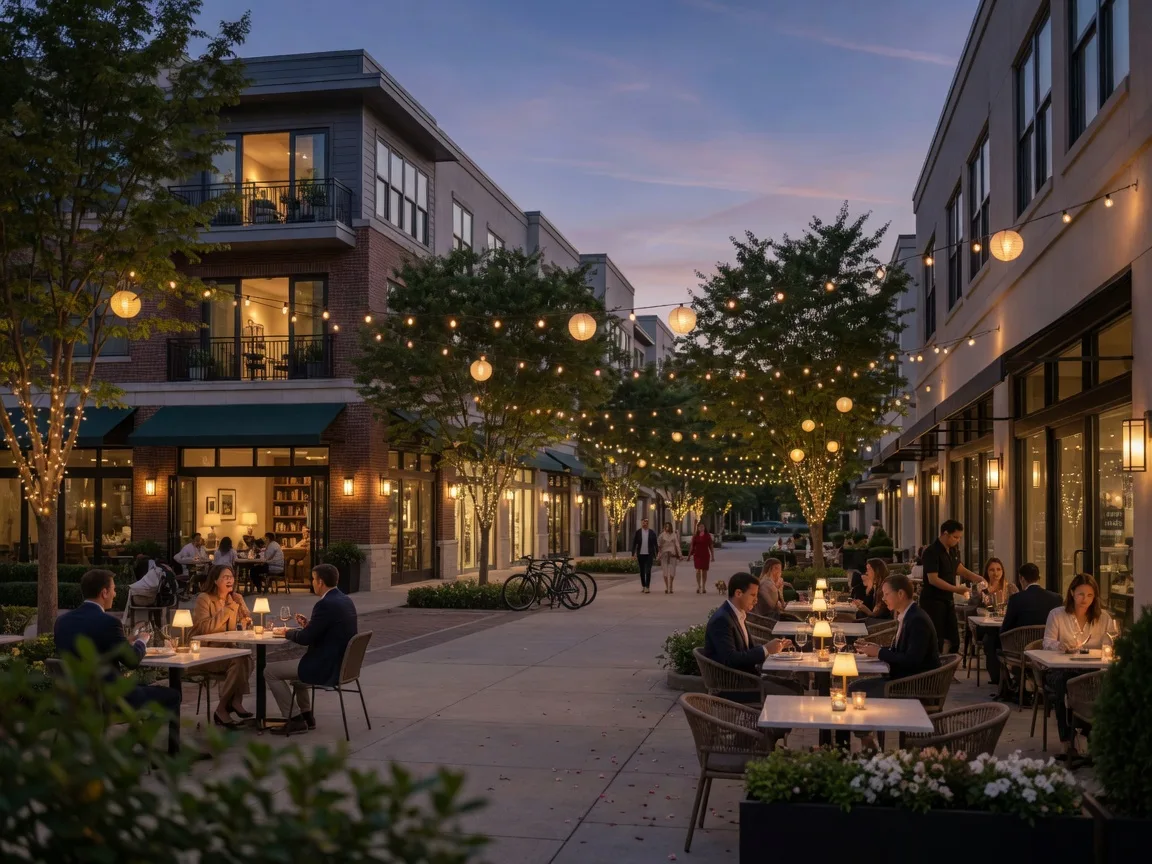
On top of the fundamentals, there is lifestyle. Avalon gives residents a walkable town center with shopping, dining, and events, while the historic downtown core adds a small-town anchor. The population of roughly 67,000 keeps growing steadily, and Alpharetta shows up on national best-places lists year after year as one of the top in-demand metro suburbs for 2026 relocators, many arriving from New Jersey, New York, and California.
I hear the same sentence from almost every family I relocate here: “We looked at half the country, and this kept coming back to the top.” The data and the experience agree.
Top-RatedSchools
Low CrimeFor Its Size
AvalonLifestyle
Neighborhoods
Best Neighborhoods & Communities in Alpharetta
These are the communities I am asked about most by relocating buyers. Price bands below are approximate and based on recent data; school zones are noted where they are consistent, but Fulton County attendance areas can change, so I always verify by address before an offer.
Windward
An established, master-planned community built around Windward Lake, with walking trails, swim and tennis centers, and a strong neighborhood calendar.
Price: Homes often $800k and up in recent years, from townhomes to lake-adjacent estate lots.
Schools: Many Windward homes fall in the Alpharetta High School attendance area with nearby elementaries such as Deerfield Elementary; zoning is verified by address.
Suits: Families who want amenities, water views, and a ready-made community from day one.
Avalon
The mixed-use district that put Alpharetta on the map: upscale shopping, restaurants, a town green, and residences above the action.
Price: Luxury apartments and condominiums; recent asking prices vary widely, with sales generally well above Metro Atlanta medians.
Schools: Alpharetta High School for many residences; verified by address with Fulton County Schools.
Suits: Professionals and empty nesters who want to park the car and walk to everything.
Downtown Alpharetta
A walkable, historic core that has been revitalized with boutiques, restaurants, parks, and events, plus newer townhome and condo builds.
Price: Townhomes and condos near the square have seen strong pricing in recent years, with many new builds above the city median.
Schools: Fulton County Schools; the Alpharetta High School cluster serves much of the downtown area.
Suits: Walkers, food lovers, young professionals, and downsizers.
Crooked Creek
A golf community area centered on Crooked Creek Golf Club, with tree-lined streets and a relaxed, established feel.
Price: Family homes in the roughly $500k to $800k range in recent years, with golf view lots at the higher end.
Schools: Crabapple Crossing Elementary and Webb Bridge Middle feed many Crooked Creek homes, with Milton High School part of the cluster.
Suits: Golfers and families who want a quiet, established neighborhood close to the Alpharetta City Center.
Crabapple
The area around historic Crabapple Road, where horses and estates meet new construction along quiet country lanes.
Price: A wide mix, from farmhouse-style family homes to luxury new builds on acreage, many well above the city median.
Schools: Many Crabapple-area homes sit in the highly regarded Milton High School attendance zone.
Suits: Families who want room to breathe and a bit of countryside in a top school district.
The Manor
A gated, golf estate community near Crabapple with grand new construction homes and a Jack Nicklaus designed course.
Price: True luxury territory; estate homes frequently exceed $1 million in recent data.
Schools: The Milton High School cluster serves much of the community; verified by address.
Suits: Luxury buyers who value privacy, golf, and a resort-style setting.
Haynes Bridge
The corridor along Haynes Bridge Road, a mix of established ranch and split-level homes from the 60s through 90s, plus newer townhomes.
Price: One of the more attainable corners of Alpharetta, with recent prices often below the city median.
Schools: Attendance areas vary block by block; both Alpharetta and Milton clusters are represented, so address verification matters here.
Suits: First-time buyers and step-up buyers who want Alpharetta schools and a GA-400 commute.
Oakmont
A leafy, established family neighborhood close to downtown and the Alpharetta City Center, with sidewalks and a neighborhood pool.
Price: More attainable family pricing that has appreciated steadily in recent years.
Schools: Alpharetta High School cluster for many homes, along with nearby elementary and middle schools.
Suits: Growing families who want character, shade trees, and proximity to downtown.
Not sure which community fits?
Tell me your budget, family size, and wish list and I will match you to the right neighborhood, not just in Alpharetta, but across North Fulton.
Housing is the headline number. Recent data shows typical Alpharetta sale prices running roughly in the $450,000 to $630,000-plus range depending on home type and location, with luxury neighborhoods such as the gated golf communities well above that. Rents start around $1,800 and climb for Avalon residences and new-construction units.
The extras matter too. Property taxes are assessed through Fulton County's millage, so Alpharetta homeowners pay county property taxes along with city taxes in most cases, and HOA dues are common in the area's planned communities, from a few hundred dollars a year to several thousand in country club neighborhoods.
On the tax side, Georgia is not a no-income-tax state. Georgia levies a flat personal income tax around 4.99% in 2026, and combined sales tax in the area runs near 7.75%. What balances the higher housing costs is the income side: a median household income around $123,000 and some of the strongest household earnings in Georgia make the math work comfortably for most relocating professionals and families.
Rents: starting around $1,800 for many apartments (recent data)
State income tax: Georgia's flat rate, roughly 4.99% in 2026
Sales tax: combined rate near 7.75% in the area
Property tax: assessed through Fulton County; HOA dues common in planned communities
Figures here are approximate and drawn from recent public data; your actual numbers depend on the property, the rate environment, and your lender. I can run real numbers on any home you are considering.
Alpharetta is served by Fulton County Schools, one of Georgia's most highly regarded districts, and its North Fulton clusters are consistently near the top of state rankings for academics and college readiness. The names relocating families research most are Crabapple Crossing Elementary, Webb Bridge Middle, Milton High School, which carries an A+ rating in recent data, and Alpharetta High School.
Private options are part of the picture too: families in North Fulton choose among respected private and independent schools in the broader area, and several neighborhood clusters feed nearby options. The one rule that matters most: attendance zones can change and are not decided by ZIP code. Always confirm the school assignment for a specific address with Fulton County Schools before you commit to a home.
Schools at a glance
Milton High School: A+ rated in recent data
Alpharetta High School: top-ranked in Georgia
Webb Bridge Middle School
Crabapple Crossing Elementary School
A note I give every relocating parent: enroll early. Popular elementaries fill early in the year, and verified zoning by address is the only reliable way to plan school assignments.
GA-400 is the employment backbone of North Fulton. Many of Alpharetta's tech campuses, concentrated along Windward Parkway, Old Milton Parkway, and the North Point corridor, sit minutes from most neighborhoods, which keeps many residents' commutes short.
Traffic Realities
Drive south on 400 toward Atlanta and peak rush hour gets heavy, as do surface streets like Haynes Bridge and Old Milton. Budget time for midtown or airport trips; the North Springs MARTA station is about 15 minutes south for rail into the city core.
Around Town
Day to day, Alpharetta life clusters around Avalon, Downtown Alpharetta, the Alpharetta City Center, and the North Point Mall redevelopment area, all within a short drive of each other.
Safety
Is Alpharetta Safe?
Alpharetta posts low violent crime for a city its size in recent data, and the city is known for being family-friendly, with an active municipal police force and neighborhoods that stay busy with families out walking, biking the Big Creek Greenway, and gathering at Avalon and downtown events.
No statistic is a guarantee, so I treat safety conversations honestly, street by street: which corridors are quietest, which complexes, which school pickup loops. Recent data points the general direction; your home search should still be specific.
The honest read: Alpharetta is widely viewed as one of the safest cities of its size in Metro Atlanta, with low violent crime and consistent national recognition.
Your First 30 Days
Moving to Alpharetta Checklist
1
Transfer utilities: electricity, gas, water, and internet should be scheduled before the moving truck arrives.
2
Register children for school with Fulton County Schools, bringing proof of address and records.
3
Update your Georgia driver's license and car registration. Georgia law gives you 30 days after establishing residency.
4
Find a doctor, dentist, and pediatrician before you need one, and transfer prescriptions.
5
Meet the neighbors. A block party, a HOA meetup, or a wave from the driveway makes the new house a home.
6
Explore local favorites: breakfast downtown, a walk at the Big Creek Greenway, an evening at Avalon.
7
Update your address everywhere that matters: banking, insurance, mail, and voting registration in Fulton County.
Get My Free Alpharetta Relocation Checklist
The version I send every relocating client: contractors, lenders, school contacts, a moving-day order of operations, and neighborhood intel all in one. Enter your name and email and I will send it right away.
By requesting the checklist, I agree to be contacted by Julia De Sosa-Rocha about real estate in Metro Atlanta. Reply ‘stop’ to opt out.
Compare
Alpharetta vs. Neighboring Communities
Alpharetta vs. Milton
Milton offers more rural privacy, larger lots, horses, and estate living, much of it in the same Milton High School zone. Choose Milton for land and quiet; choose Alpharetta for walkability and commercial amenities.
Johns Creek is even quieter and more residential, and it recently ranked in the top 5 on a national best places to live list. It trades some of Alpharetta's commercial energy for an even quieter suburban rhythm.
Roswell has a historic downtown feel, river parks, and a slightly more established, lived-in character. Alpharetta skews newer and more polished; Roswell skews charming and historic.
North in Cumming and Forsyth County you get newer construction and more bang for the buck, often with Forsyth's top-rated schools. The trade is a longer commute for anyone working in Alpharetta proper.
Yes, by almost every measure people care about. Alpharetta combines top-rated schools, low violent crime relative to its size, a strong job market along the GA-400 corridor, and lifestyle anchors like Avalon and the downtown historic core. It consistently appears on national best-places lists, and it is drawing relocating families, executives, and empty nesters for 2026.
How much do you need to make to live in Alpharetta?
Recent data puts Alpharetta's median household income around $123,000 or higher, one of the highest in the state. What you personally need depends on your home price, interest rate, and property taxes. As a very rough rule of thumb, buyers targeting Alpharetta's typical homes have been budgeting well above the national norm, and a lender can give you an exact picture in minutes. I can also connect you with trusted local lenders.
What are the best neighborhoods in Alpharetta?
The answer depends on your lifestyle. Windward for lake amenities and community-centered family living, Avalon for walkability, Downtown Alpharetta for walkers and downsizers, Crooked Creek for golf, Crabapple and The Manor for luxury on acreage, and Haynes Bridge or Oakmont for more attainable family pricing. I have guided clients through all of them and can match your budget and priorities to the right community.
Are the schools in Alpharetta good?
Yes. Alpharetta is served by Fulton County Schools, one of Georgia's most highly regarded districts. Standouts include Crabapple Crossing Elementary, Webb Bridge Middle, and Milton High School, which carries an A+ rating in recent ratings, alongside Alpharetta High School. Attendance zones can change over time, so I always recommend confirming the exact school zone for a specific address before you make an offer.
Is Alpharetta safe?
Alpharetta is widely considered one of the safer cities of its size in Metro Atlanta, with low violent crime and an active municipal police presence. As with any city, specific streets and apartment complexes vary, and recent statistics are not a guarantee. I can point you to the quieter corners and to neighborhoods that fit your comfort level.
What's the commute like in Alpharetta?
For many residents, the commute is a short hop: the major tech campuses in Alpharetta cluster along Windward Parkway, Old Milton Parkway, and the North Point corridor, often 10 to 20 minutes by car. Commuting south to Atlanta means GA-400, and peak traffic on 400 and surface streets like Haynes Bridge and Old Milton can be heavy at rush hour. The North Springs MARTA station is roughly 15 minutes south for rail access into the city.
Why are so many people moving to Alpharetta?
A mix of jobs, schools, and lifestyle. The GA-400 corridor is home to hundreds of technology companies, including campuses for Microsoft, ADP, and Verizon, drawing relocators from New Jersey, New York, and California in particular. Above that, buyers find top-tier schools, safe neighborhoods, and an unusually high quality of life in one address.
I have helped families relocate to North Fulton for 23 years, many from out of state, and I can handle everything from a first virtual tour to closing day. Let's talk.
Get weekend events, hidden restaurants, family activities, local businesses, giveaways, and insider recommendations… Because living here should be just as exciting as buying here.
By subscribing, you agree to receive marketing messages from Julia De Sosa-Rocha. Reply ‘stop’ to opt out.